
How to Get Them Right
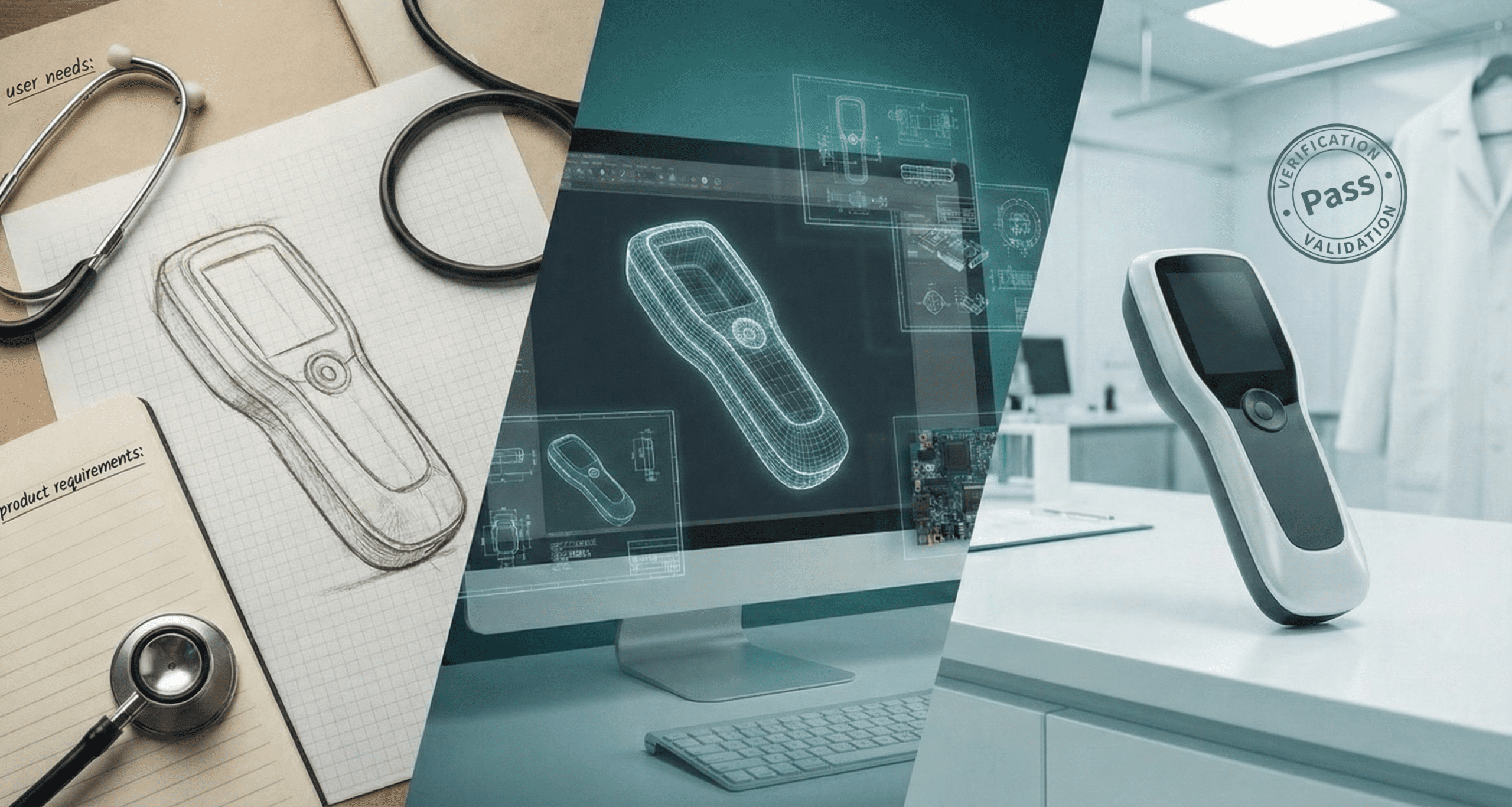
Designing a successful medical device is a disciplined process rooted in systemized product development and advanced regulatory compliance, not luck or guesswork. Every life saving product on the market today has passed through FDA-mandated design controls, integrated risk analysis, and rigorous clinical validation.¹
Whether developing diagnostics, implantables, or wearables, each phase builds on the last and connects user needs with regulatory standards and engineering excellence. This guide breaks down the four key design stages, pitfalls to avoid, and best practices.
Phase 1: Product Definition & Concept Development
Every successful device begins not with a prototype, but a robustly defined clinical need. This phase demands:
- Observing clinician and patient workflows
- Mapping existing solutions, identifying pain points and market gaps
- Drafting a Product Requirements Document (PRD), your single source of truth for intended use, user needs, and regulatory context
Deliverables from this phase include user need statements, intended use definitions, an initial risk sketch, and a PRD outline. Downstream recalls and compliance issues can be avoided with proper design input definition.
Common Mistake: Jumping to design before confirming user needs.
Pro Tip: Involve both clinical users and regulatory consultants before committing to features.
Phase 2: Feasibility & Design Requirements
Turning a concept into an actionable, testable plan means:
- Confirming technical feasibility with current technologies
- Identifying high-risk areas early (e.g., biocompatibility, sterilization, software reliability)
- Translating user needs into measurable engineering requirements
Key deliverables here: technical feasibility report, risk assessment, and draft engineering specification. Regulatory planning also starts here, determine device classification and draft your traceability matrix, a foundational element required by both FDA1 and ISO 134853 for mapping user needs through design, verification, and validation. An early traceability matrix improves audit readiness and reduces risk of critical requirements being missed.
To make this practical, we’ve created a free Traceability Matrix Template that helps teams document and link user needs through verification and validation activities.
It’s a simple but powerful tool that keeps projects audit-ready and ensures nothing falls through the cracks as engineering and regulatory workstreams progress.
Common Mistake: Leaving feasibility to engineering alone.
Pro Tip: Include cross-functional review with human factors, manufacturing, and QA teams.
Phase 3: Detailed Design & Engineering
Engineering teams, mechanical, electrical, software, usability, now build an integrated system to specification:
- Form and function: enclosure/mechanics
- Electronics: PCB, sensors, communications
- Software: UI/UX, embedded code
- Materials: biocompatibility, sterilization compatibility
- Manufacturing: tooling, tolerances, cost modeling
- Human factors: early prototype feedback and usability studies
FDA and academic literature show that collaborative, cross-functional review at this phase reduces manufacturing errors and recall risk.1 Deliverables include design drawings, CAD files, software architecture, working prototypes, a verification plan, and an updated risk register.
Common Mistake: Treating human factors testing as an afterthought.
Pro Tip: Run early formative usability tests to uncover issues before verification.
Phase 4: Testing & Validation
Validation is more than proving functionality: it is about demonstrating safety, effectiveness, and regulatory compliance under real-world conditions:
- Verification: Do outputs match requirements based on bench/lab testing and documentation? Think: “Did we design the device right?”
- Validation: Do users achieve intended outcomes under actual conditions (clinical, usability, human-factor studies)? Think: “Did we design the right device?”
Testing includes performance reliability, biocompatibility, EMC/safety, software validation, packaging, and sterilization.1 Reports produced, verification, validation (V&V), human factors, and a final design history file (DHF) are key support for regulatory submissions.
Common Mistake: Compressing test timelines or taking shortcuts on revision documentation.
Pro Tip: Build test planning and design revisions into your project schedule from the beginning.
Lifecycle Risk Snapshot
| Design Phase | Deliverable Example | Risk If Skipped |
| Definition | PRD, user research | Misaligned product, failed adoption |
| Feasibility | Design inputs, trace matrix | Technical or financial failure |
| Detailed Design | Drawings, code, DfM plan | Manufacturing/compliance headaches |
| Testing/Validation | V&V reports, usability | Regulatory hold, unsafe devices |
Best-Practice Takeaways
- Effective device programs follow structured, phase-based systems, no ad hoc shortcuts.
- Traceability, documentation, and risk management are regulatory-mandated safeguards, not red tape.
- Cross-disciplinary collaboration yields lower costs, faster design time, and smoother regulatory approval.
Expert Design Process Review
If you’re planning or currently running a device program, request a free readiness assessment.
We’ll review your current phase, identify gaps, and recommend pragmatic improvements.
References
- FDA Design Control Guidance for Medical Device Manufacturers (21 CFR 820.30): https://www.fda.gov/regulatory-information/search-fda-guidance-documents/design-control-guidance-medical-device-manufacturers
- FDA Device Development Process: https://www.fda.gov/patients/learn-about-drug-and-device-approvals/device-development-process
- ISO 13485:2016 Section 7.5.9 Traceability